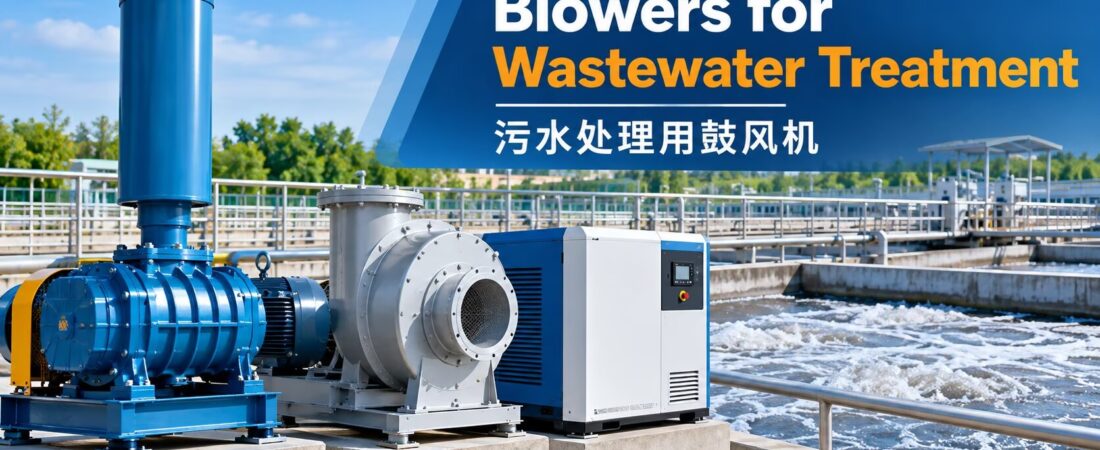
Choosing the right blower for wastewater treatment is essential for an efficient and reliable aeration system. Different wastewater treatment plants require different airflow, pressure, energy efficiency and operating conditions. Roots blowers, centrifugal blowers and magnetic levitation blowers each have their own advantages. Understanding their differences can help you select a suitable blower for your wastewater treatment application.
Why Is a Wastewater Blower Important in Wastewater Treatment?
Blowers play an important role in biological wastewater treatment by supplying air to the aeration tank. The oxygen provided by the blower supports microorganisms that break down organic pollutants in the wastewater. A properly selected blower can provide stable airflow while helping reduce energy consumption and operating costs.
Main Types of Wastewater Blowers
1. Roots Blower
Roots blowers are positive displacement blowers that provide stable airflow over a wide range of operating conditions. They are widely used for aeration in small and medium-sized wastewater treatment plants because of their simple structure, reliable operation and relatively easy maintenance.
2. Centrifugal Blower
Centrifugal blowers use a high-speed impeller to increase the velocity and pressure of air. They are suitable for wastewater treatment systems that require continuous airflow and higher air volumes, and can provide efficient operation when properly selected for the required working conditions.
3. Magnetic Levitation Blower
Magnetic levitation blowers use magnetic bearings and high-speed centrifugal technology to provide oil-free air with high energy efficiency. With low vibration, low maintenance requirements and intelligent control, they are particularly suitable for wastewater treatment plants seeking to reduce long-term energy and operating costs.
The best blower for wastewater treatment should be selected according to airflow, pressure, energy efficiency and actual operating conditions.
Key Factors When Choosing a Wastewater Blower
1. Airflow Requirements
Airflow is one of the most important factors when selecting a blower. The required airflow depends on the wastewater treatment capacity, aeration tank size and oxygen demand. Selecting the correct airflow helps ensure sufficient oxygen supply while avoiding unnecessary energy consumption.
2. Pressure Requirements
The required pressure depends mainly on the water depth, diffuser resistance and pressure losses in the piping system. A blower must provide enough pressure to overcome these resistances and maintain stable aeration. Choosing a blower with the correct pressure range can improve system reliability and avoid unnecessary energy consumption.
3. Energy Efficiency
Aeration can account for a significant portion of the energy consumption in a wastewater treatment plant. When selecting a blower, energy efficiency should therefore be considered together with airflow and pressure requirements. For systems that operate continuously, an efficient blower can help reduce long-term electricity costs.
4. Maintenance Requirements
Maintenance requirements should also be considered when selecting a blower. Regular inspection and proper maintenance help ensure stable operation and extend equipment service life. Different blower technologies have different maintenance needs, so the long-term maintenance cost should be considered during selection
5. Noise and Vibration
Noise and vibration can be important factors, especially when a wastewater treatment plant is located near residential or commercial areas. Selecting a blower with appropriate noise control and low vibration can help improve the operating environment.
Comparison of Blower Types for Wastewater Treatment
| Factor | Roots Blower | Centrifugal Blower | Magnetic Levitation Blower |
| Airflow | Small–Medium | Medium–Large | Medium–Large |
| Energy Efficiency | Moderate | High | High |
| Maintenance | Regular | Moderate | Low |
| Noise & Vibration | Higher | Moderate | Low |
| Suitable For | Small–Medium Plants | Medium–Large Plants | Energy-Saving Applications |
Which Blower Should You Choose?
Choosing the right wastewater blower is essential for achieving stable aeration performance, reducing energy consumption, and maintaining reliable operation. Roots blowers are a practical choice for applications requiring stable airflow and simple maintenance. Centrifugal blowers are suitable for systems with larger airflow requirements, while magnetic levitation blowers are an excellent option for projects that prioritize high energy efficiency, low noise and reduced maintenance.
To select the most suitable blower, parameters such as required airflow, pressure, wastewater treatment capacity and operating hours should be considered together. Qingsheng Blower can provide blower selection support based on your actual operating conditions.
Conclusion
Selecting the right blower for wastewater treatment can improve aeration efficiency, reduce energy consumption and support reliable system operation. The best solution should always be based on actual airflow, pressure and operating requirements. If you are planning a wastewater treatment project or need help selecting a blower, contact Qingsheng Blower for technical support and a suitable blower solution.